
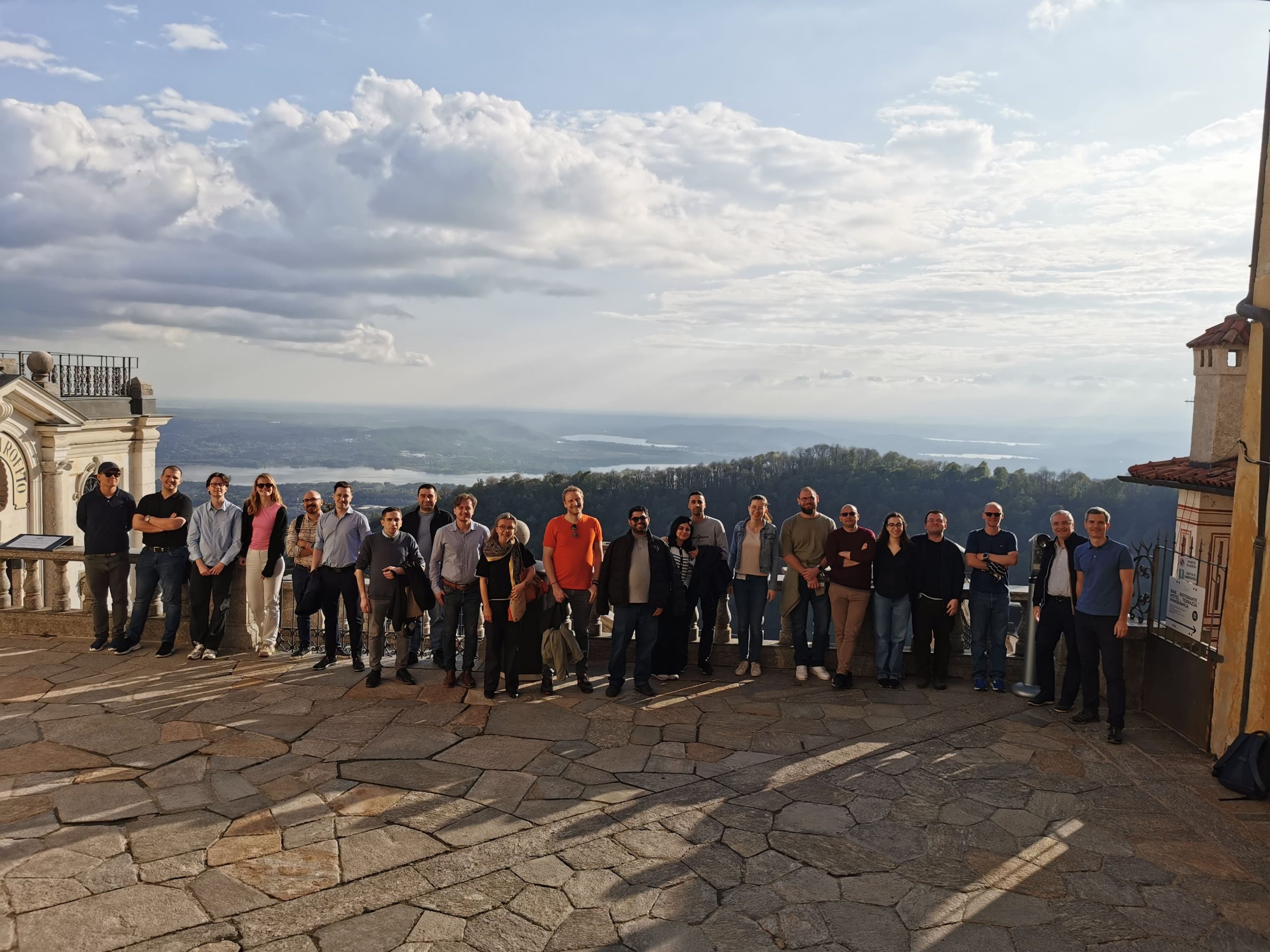
Ispra, 14–17 April 2026
The European Commission’s Joint Research Centre (JRC) hosted the 4th HISTRATE Training School, entitled “Advanced Testing and Instrumentation for Composites under High Strain Rates”, from 14 to 17 April 2026 at its Ispra site in Italy. The training school was organised within the framework of the COST Action CA21155 – HISTRATE, supported by COST (European Cooperation in Science and Technology), and made use of the JRC’s advanced experimental facilities for dynamic testing.
The program of the event was coordinated by Dr Marco Peroni (JRC), who led several lectures and practical sessions. By holding the training at JRC Ispra, participants benefited from direct access to the facilities of the European Laboratory for Structural Assessment, including Split Hopkinson Pressure Bar (SHPB) systems used for high strain rate experiments.
The training school brought together PhD students, early-career researchers and young professionals from academia, research organisations and industry. The programme combined theoretical lectures with extensive hands-on laboratory work, addressing experimental methods, instrumentation and data analysis for the dynamic characterisation of composite materials under impact and crash-relevant loading conditions.
Training activities were delivered by a team of experienced trainers from the HISTRATE network, including:
- Dr Marco Peroni (JRC)
- Prof. Michele Meo (Southampton University, UK)
- Dr Mauro Zarrelli (National Research Council, Italy)
- Prof. Patricia Verleysen (Ghent University, Belgium)
- Dr Andreas Hornig (Dresden University of Technology, Germany)
- Dr Dayou Ma (Politecnico di Milano, Italy)
- Dr Andrei Anisimov (TU Delft, Netherlands)
The lectures covered fundamentals and advanced topics in high strain rate behaviour of polymers and composites, instrumentation and sensors, experimental–numerical validation strategies, and full-field measurement techniques. The practical sessions included compression and tension testing using SHPB systems, Digital Image Correlation (DIC) exercises, and group-based data processing activities, allowing participants to directly link theory with experimental practice.
In addition to the technical programme, the training school promoted knowledge exchange and networking through laboratory tours, group work and discussion sessions, supporting the objectives of the HISTRATE COST Action to strengthen European collaboration across disciplines and sectors.
The Joint Research Centre and the HISTRATE organisers thank all trainers and participants for their active contribution, which ensured the successful delivery of the 4th HISTRATE Training School.